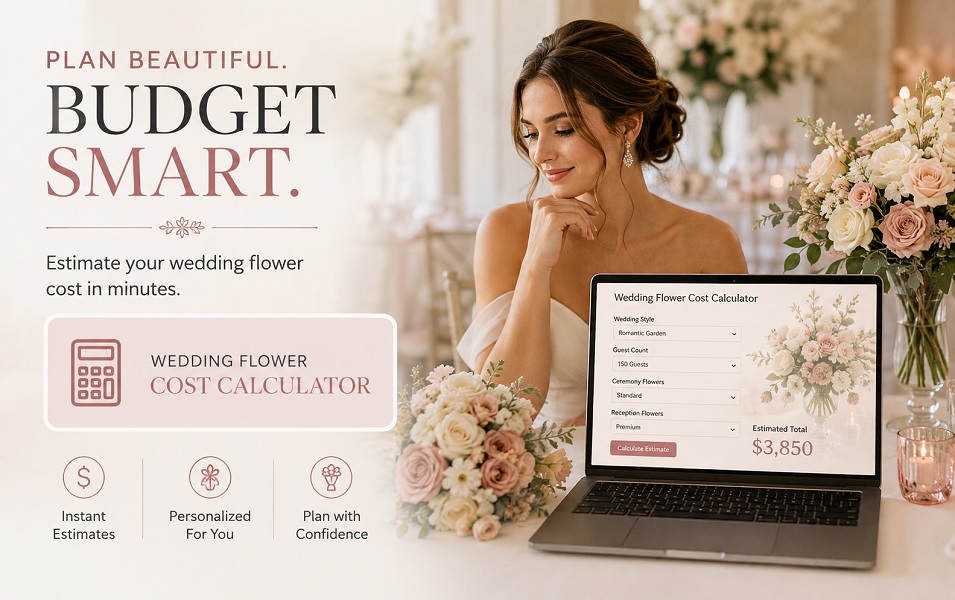
Planning your wedding flowers can feel overwhelming without clear numbers. A wedding flower cost calculator helps you estimate expenses accurately before meeting florists. This tool breaks down costs by bouquet type, centerpiece style, and seasonal availability. You’ll know exactly what to expect and avoid surprise charges later.
Understanding Wedding Flower Pricing Basics
Wedding flower prices vary widely based on flower types, season, and arrangement complexity. Peak seasons like spring and summer often cost more due to higher demand and limited availability. Local flowers typically cost less than imported varieties that require special shipping and handling.
Florists factor in labor, design time, and delivery when setting their prices. A simple bridal bouquet might start around $150, while elaborate centerpieces can reach $300 each. Understanding these base costs helps you set realistic expectations for your total floral budget.
How a Wedding Flower Cost Calculator Works
A wedding flower cost calculator asks specific questions about your wedding needs and preferences. You input guest count, ceremony size, and preferred flower types to get personalized estimates. The tool then calculates costs based on current market rates and regional pricing data.
These calculators consider factors like arrangement complexity and flower rarity in their algorithms. Some advanced tools even adjust prices based on your wedding date and location. This gives you a realistic range rather than a single fixed number for planning purposes.
Benefits of Using Digital Flower Budget Tools
Digital flower budget tools save time by providing instant estimates without calling multiple florists. You can test different scenarios quickly to see how changes affect your overall budget. This flexibility helps you find the perfect balance between your dream flowers and available funds.
These tools also help you communicate more effectively with professional florists. When you arrive with specific numbers and preferences, consultations become more productive and focused. You’ll spend less time on basic pricing questions and more time discussing design details.
Key Factors That Influence Flower Costs
Seasonal availability remains the biggest factor affecting wedding flower costs throughout the year. Out-of-season flowers require importing from distant locations, significantly increasing their price point. Choosing in-season blooms can reduce your floral budget by thirty to fifty percent easily.
Geographic location also plays a crucial role in determining final flower arrangement prices. Urban areas typically charge more due to higher operating costs and increased demand from couples. Rural locations might offer better prices but could have limited florist options and flower varieties.
Creating Your Personalized Flower Budget
Start by determining your total wedding budget and allocating a percentage specifically for flowers. Most couples spend between eight to ten percent of their total budget on floral arrangements. This gives you a clear spending limit before you begin exploring specific flower options.
Prioritize your must-have arrangements versus nice-to-have decorative elements for your ceremony. Focus your budget on high-impact pieces like bridal bouquets and altar arrangements first. Then allocate remaining funds to secondary items like table centerpieces and aisle decorations.
Common Wedding Flower Arrangements and Costs
Bridal bouquets typically range from $150 to $350 depending on size and flower selection. Bridesmaid bouquets cost less, usually between $75 and $150 each for standard designs. Boutonnieres for groomsmen and family members average $15 to $25 per piece.
Centerpiece costs vary dramatically based on complexity and table count at your venue. Simple bud vase arrangements might cost $50 each, while elaborate tall centerpieces reach $200. Consider mixing high and low arrangements to create visual interest while managing overall expenses.
Seasonal Flower Selection Strategies
Spring weddings offer tulips, peonies, and lilacs at their most affordable and beautiful peak. Summer provides abundant roses, sunflowers, and dahlias in countless colors and varieties. Fall features rich chrysanthemums, marigolds, and dried elements that create stunning rustic arrangements.
Winter weddings can still be gorgeous with evergreens, berries, and forced bulbs like hyacinths. Consider incorporating seasonal foliage and greenery to add volume without increasing flower costs. This approach creates lush arrangements while keeping your budget under control effectively.
Maximizing Your Wedding Flower Cost Calculator Results
Using a wedding flower cost calculator multiple times helps you refine your flower choices strategically. Try different flower combinations and arrangement styles to see how they impact your total budget. This experimentation often reveals beautiful alternatives you might not have considered initially.
Share your calculator results with potential florists during consultations for more accurate quotes. Professional florists can often match or beat calculator estimates while offering valuable design insights. This collaborative approach ensures you get the best value for your floral investment.
Working with Professional Florists Effectively
Bring your calculated budget and flower preferences to initial florist consultations for productive meetings. Ask specifically about package deals that might offer better value than individual arrangement pricing. Many florists offer discounts when you book multiple arrangement types together for your wedding.
Request detailed breakdowns showing labor, flowers, and delivery costs separately for transparency. This information helps you understand where your money goes and identify potential savings opportunities. Some florists might suggest alternative flowers that look similar but cost significantly less.
DIY Flower Arrangement Considerations
DIY flower arrangements can reduce costs by thirty to forty percent if you have helpful friends and family. However, factor in your time, stress levels, and potential for mistakes on your wedding day. Professional florists handle everything from conditioning flowers to setup and breakdown seamlessly.
Consider a hybrid approach where you handle simple items like pew bows while professionals create complex arrangements. This strategy lets you save money on easier tasks while ensuring critical pieces look perfect. Always practice your DIY arrangements weeks before the wedding to perfect your technique.